Mapping the Evolution of Gamification Layers Within Live Dealer Environments Under US Regulatory Frameworks
Finley Reed · Aug 24, 2026
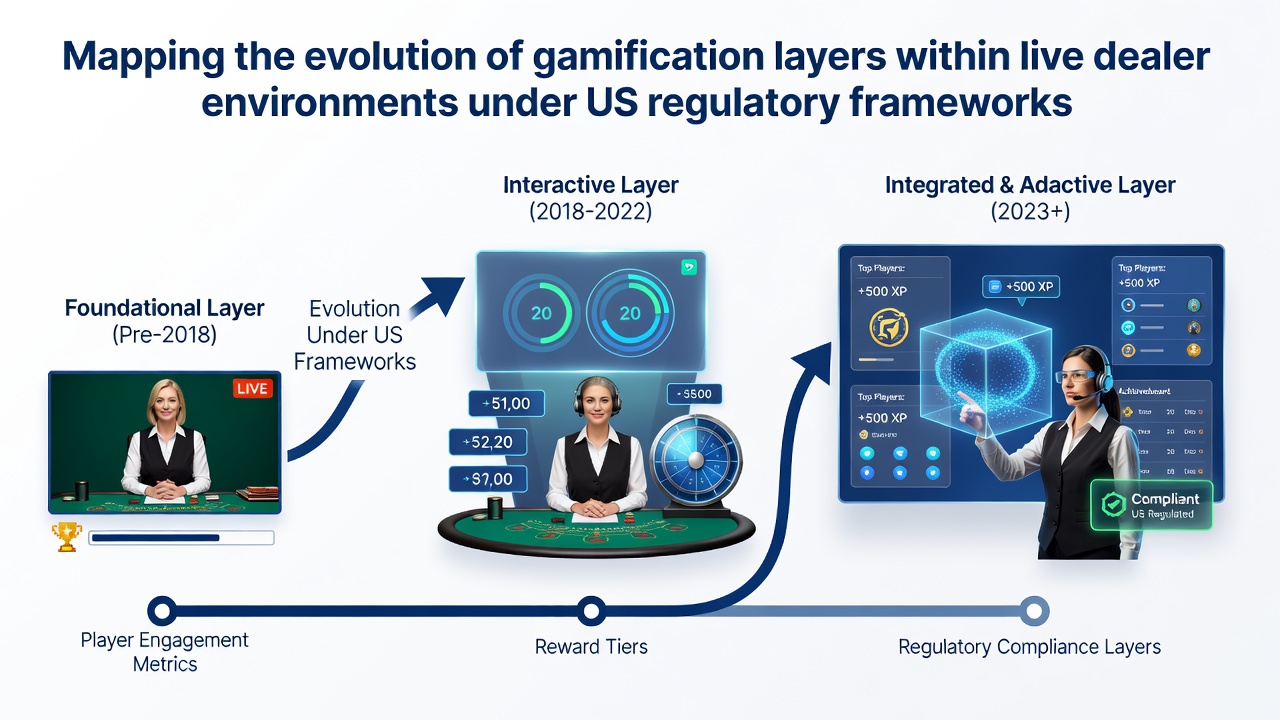
Mapping the Evolution of Gamification Layers Within Live Dealer Environments Under US Regulatory Frameworks
Live dealer platforms in the United States have incorporated gamification elements gradually since the early 2010s, when states such as New Jersey and Pennsylvania first authorized online casino operations, and these layers now include point accumulation systems, achievement badges, leaderboards, and personalized challenge modules that overlay traditional table games like blackjack and roulette.
Initial implementations focused on basic reward structures that mirrored land-based loyalty programs, yet operators soon expanded these features to include real-time progress tracking during streamed sessions with human dealers, which created continuous engagement loops while remaining subject to state-level oversight on fairness and consumer protection.
Early Integration Phase and State-Level Foundations
Regulatory frameworks established by bodies like the New Jersey Division of Gaming Enforcement and the Pennsylvania Gaming Control Board required that gamification tools undergo review to confirm they did not alter game outcomes or encourage excessive play, which led developers to build modular systems that could toggle specific features based on jurisdiction.
By 2018 several platforms had introduced tiered loyalty mechanics that awarded virtual currency for session duration and wager volume, and these systems operated alongside live dealer feeds without interfering with random number generation or dealer procedures, as documented in compliance filings submitted to state regulators.
Expansion of Layers and Technological Adaptations
Subsequent years saw the addition of social comparison tools such as anonymous leaderboards and collaborative challenges, where players could join group objectives during live roulette or baccarat rounds, and these features gained traction because they leveraged existing streaming infrastructure while complying with advertising and inducement rules that vary across states.
Operators integrated data analytics to deliver adaptive challenges that adjusted difficulty according to individual play patterns, yet all such personalization remained logged for audit trails required under frameworks from Michigan and West Virginia gaming commissions.
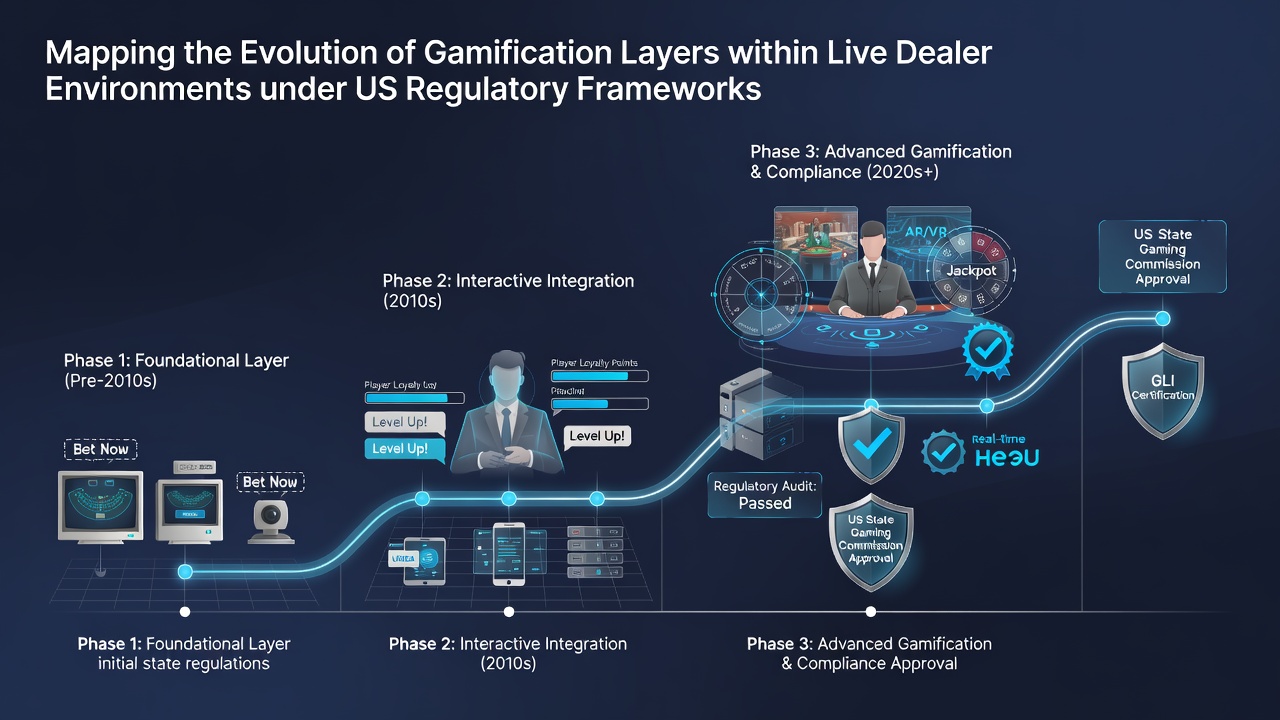
Research from the American Gaming Association indicates that adoption of these layered systems correlated with increased session metrics in states where iGaming had matured, while separate academic analyses from university gaming studies departments noted that visual progress indicators helped maintain player awareness of time spent at the tables.
Regulatory Refinements Through 2026
Updates to compliance standards in early 2026 prompted several operators to refine gamification interfaces so that bonus triggers and achievement pop-ups could be disabled for self-excluded accounts without disrupting the live dealer stream, and similar adjustments appeared in Connecticut and Delaware regulatory guidance issued during the summer months.
August 2026 filings from multiple state agencies showed that platforms continued to submit updated gamification protocols for pre-approval, particularly when new elements such as augmented reality overlays or cross-game progression systems were proposed, ensuring alignment with existing responsible gaming mandates.
Industry reports reveal that collaboration between software providers and regulators produced standardized testing protocols for these layers, which verify that virtual rewards do not function as disguised inducements prohibited under certain state statutes.
Current Landscape and Cross-State Variations
Platforms operating across multiple jurisdictions now maintain separate configuration profiles that activate or suppress specific gamification components depending on the player’s registered state, and this approach satisfies differing interpretations of what constitutes acceptable marketing versus prohibited inducement.
Observers note that states with more established iGaming markets have permitted deeper integration of narrative-driven challenges, such as seasonal story arcs tied to live dealer tournaments, whereas newer markets maintain stricter limits on visual prominence and frequency of reward notifications.
Data compiled by regional gaming associations shows steady expansion of these systems through the first half of 2026, with particular growth in mobile-accessible layers that sync progress across live dealer sessions without requiring additional downloads or external applications.
Conclusion
The trajectory of gamification within US live dealer environments reflects ongoing negotiation between technological capability and regulatory boundaries that differ from state to state, and continued filings through 2026 suggest further incremental adjustments rather than wholesale redesigns. These developments remain documented in public compliance records maintained by individual state gaming authorities and industry monitoring organizations.